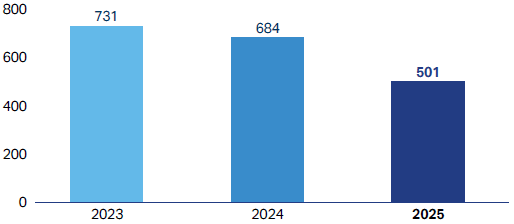
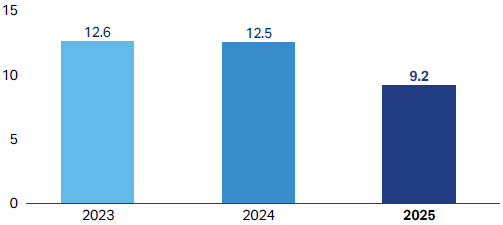
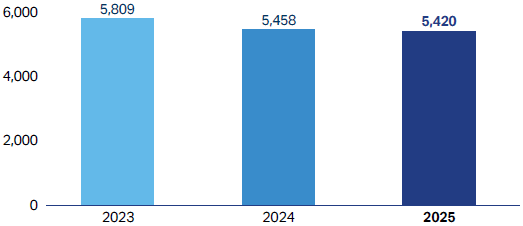
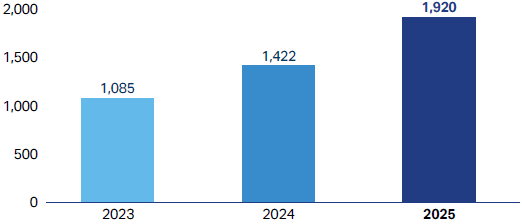
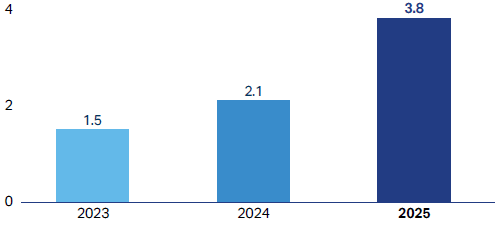
Lost-time injury frequency rate (LTIFR) (per million work hours)
Our strategic performance indicators
Self-assessment of 2025 performance

Link to Thrive strategic objectives

Link to 4Ps and SDGs

Why is this important?
LTIFR is an important measure of our business’s
safety. We target zero harm and aim to improve
LTIFR by at least 10% year-on-year.
® Linked to executive remuneration
△ Identified sustainability goal1

2026 objectives
- Bring every employee and contractor safely
home every day, by investing in behavioural
safety and accountability policies.
1 For this indicator, we have clear targets for 2030 that we are working towards. See our 2025 Sappi Group Sustainability Report for more information.
Legend

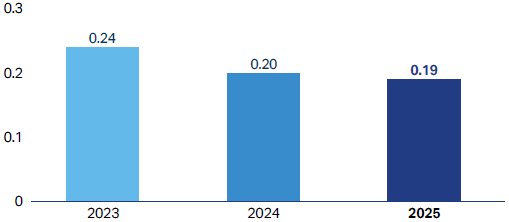
Gender diversity (%)
Our strategic performance indicators
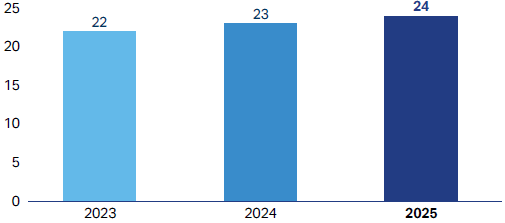
Self-assessment of 2025 performance against a target of 23%

Link to Thrive strategic objectives
Link to 4Ps and SDGs
Why is this important?
We view diversity as a strategic advantage that
enhances our competitiveness and viability as a
business and contributes to a thriving world; we
commit to appoint more women in senior positions.
△ Identified sustainability goal1
2026 objectives
- Continue to advance our gender diversity to promote more women to senior positions (HRL16 and upwards) in line with our new global 2030 target.
1 For this indicator, we have clear targets for 2030 that we are working towards. See our 2025 Sappi Group Sustainability Report for more information.
Legend
Supplier Code of Conduct (%)
Our strategic performance indicators
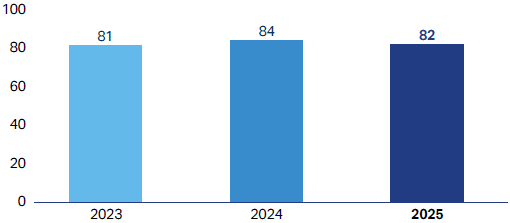
Self-assessment of 2025 performance against a target of 80%

Link to Thrive strategic objectives
Link to 4Ps and SDGs
Why is this important?
Research indicates that 85% of consumers
are more likely to buy from a company with a
reputation for sustainability. By working together
in partnership with suppliers, we can better identify
risk, assess social and environmental performance,
and encourage commitment to sustainable choices
and the SDGs throughout our value chain.
△ Identified sustainability goal1
2026 objectives
- Target 85% procurement spend with declared
compliance with Supplier Code of Conduct in line
with our new 2030 global target.
1 For this indicator, we have clear targets for 2030 that we are working towards. See our 2025 Sappi Group Sustainability Report for more information.
Legend
Employee engagement (%)
Our strategic performance indicators
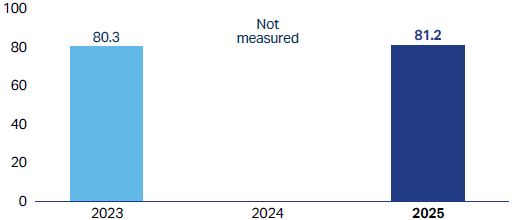
Self-assessment of 2025 performance
Link to Thrive strategic objectives
Link to 4Ps and SDGs
Why is this important?
We rely on a productive and engaged workforce.
Employee engagement has been linked to higher
safety performance, lower staff turnover, improved
productivity and efficiency.
△ Identified sustainability goal1
2026 objectives
- In 2026 we will focus on closing out action items
identified by employee focus groups post our
2025 survey.
1 For this indicator, we have clear targets for 2030 that we are working towards. See our 2025 Sappi Group Sustainability Report for more information.
Legend
Specific greenhouse gas (GHG) (Scope 1 and 2) emissions (kg CO2e/adt)
Our strategic performance indicators
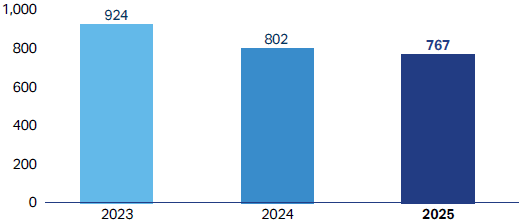
Self-assessment of 2025 performance against a target of 735.3 kg CO2e/adt
Link to Thrive strategic objectives

Link to 4Ps and SDGs

Why is this important?
Since the UN Climate Change Conference (COP26)
in Glasgow, Scotland in November 2021, climate
impacts have worsened, and carbon emissions
have risen to record levels.
We align with the climate science by having our
targets approved by the SBTi and are taking
focused action to future-proof our business
against the physical and transitional impacts
of climate change and be part of the solution.
® Linked to executive remuneration
△ Identified sustainability goal1,2
2026 objectives
- Continue to advance our climate transition plan
through targeted abatement initiatives and
operational efficiency improvements in line with
our validated science-based target to decreasing
specific GHG emissions (Scope 1 and 2) by 41.5%
by 2030 against a base year of 2019.
1 For this indicator, we have clear targets for 2030 that we are working towards. See our 2025 Sappi Group Sustainability Report for more information.
2 Restatement of data for specific GHG (Scope 1 and 2) emissions due to divestment of Lomati Sawmill and improved data quality for Sappi North America.
Legend
Share of renewable and clean energy (%)
Our strategic performance indicators

Self-assessment of 2025 performance against a target of 61.5%
Link to Thrive strategic objectives
Link to 4Ps and SDGs

Why is this important?
This target supports our commitment to carbon
emissions reduction and focused action to
future-proof our business against the physical and
transitional impacts of climate change and be part
of the solution.
△ Identified sustainability goal1,3
2026 objectives
- Continue to leverage our fuel switching abatement
lever and energy procurement strategy to further
increase our share of renewable and clean energy
in our operations.
1 For this indicator, we have clear targets for 2030 that we are working towards. See our 2025 Sappi Group Sustainability Report for more information.
3 Restatement of data for share of renewable and clean energy due to divestment of Lomati Sawmill.
Legend
Energy intensity (GJ/adt)
Our strategic performance indicators
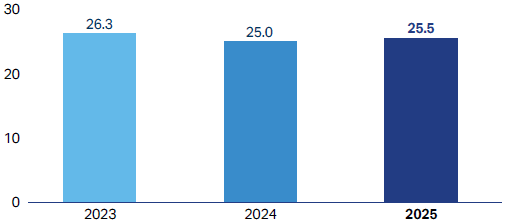
Self-assessment of 2025 performance against a target of 21 GJ/adt
Link to Thrive strategic objectives
Link to 4Ps and SDGs
Why is this important?
Energy intensity is a measure of how efficiently we
are operating. By continually improving this metric,
we manage costs and lower our environmental
impact.
△ Identified sustainability goal1,2
2026 objectives
- Improve our energy intensity through operational efficiency improvements.
1 For this indicator, we have clear targets for 2025 that we are working towards. See our 2024 Sappi Group Sustainability Report for more information.
2 Restatement of data for energy intensity due to divestment of Lomati Sawmill.
Legend
Specific process water usage (m3/adt)3
Our strategic performance indicators

Self-assessment of 2025 performance against a target of 35.4 m3/adt
Link to Thrive strategic objectives
Link to 4Ps and SDGs

Why is this important?
Water has been identified as one of the most
serious sustainability challenges facing the planet,
partly due to the impacts of climate change. Forests
and plantations, pulp and paper operations are
highly dependent on the use and responsible
management of water resources.
△ Identified sustainability goal1,4
2026 objectives
- Reduce water use in line with our new 2030 global
water target that now applies to all manufacturing
sites.
1 For this indicator, we have clear targets for 2030 that we are working towards. See our 2025 Sappi Group Sustainability Report for more information.
3 This indicator applied to mills in South Africa for the strategic period 2020 to 2025 but will be a global target for period 2026 to 2030.
4 Restatement of data for specific process water usage due to divestment of Lomati Sawmill.
Legend
Specific landfilled solid waste (kg/adt)
Our strategic performance indicators
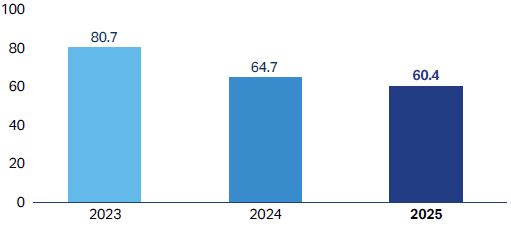
Self-assessment of 2025 performance against a target of 61.3 kg/adt
Link to Thrive strategic objectives

Link to 4Ps and SDGs

Why is this important?
Our continued focus to reduce solid waste-to-landfill
supports the move towards a circular
economy. This approach aligns with our purpose of
contributing to a thriving world, one with less waste,
lower costs and reduced environmental impact.
△ Identified sustainability goal1,2
2026 objectives
- Reduce specific landfilled waste in line with our
new 2030 global target.
1 For this indicator, we have clear targets for 2030 that we are working towards. See our 2025 Sappi Group Sustainability Report for more information.
2 Restatement of data for specific landfilled solid waste due to divestment of Lomati Sawmill and improved data quality for Sappi North America.
Legend
Certified fibre (%)
Our strategic performance indicators
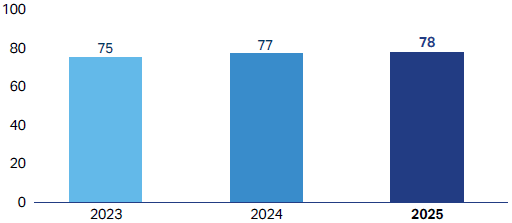
Self-assessment of 2025 performance
against a target of >75%
Link to Thrive strategic objectives
Link to 4Ps and SDGs

Why is this important?
We are committed to sourcing woodfibre from
forests and timber plantations in a manner that
promotes their health and supports community
wellbeing.
△ Identified sustainability goal1,3
2026 objectives
- Increase our share of certified fibre in line with our
new 2030 global target.
1 For this indicator, we have clear targets for 2030 that we are working towards. See our 2025 Sappi Group Sustainability Report for more information.
3 Due to a difference in timing of data collection for Matane Mill, the 12-month reporting period for Matane Mill is 01 July 2024 to 30 June 2025. All other mill data is aligned with Sappi’s financial year.
Legend