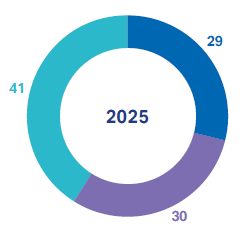
Our diverse product portfolio includes three main categories: pulp, packaging and speciality papers, and graphic papers.
Sales volumes* (%)
* Excluding Sappi Forestry operations.
Sales revenue* (%)
* Excluding Sappi Forestry operations.
Adjusted EBITDA* (%)
* Excluding the unallocated and eliminations
(the group’s treasury and insurance captive).
“ We continue to invest in all three of our world-class dissolving wood pulp (DWP) production sites – further entrenching our leadership position as a trusted source for responsible and sustainable DWP.”
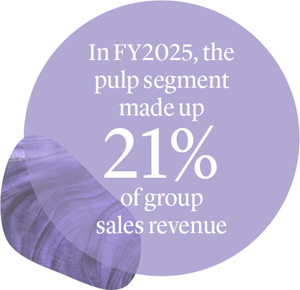
Our pulp segment is a cornerstone of our business, predominantly comprised of two key product categories: DWP and high-yield pulp (HYP). To maximise efficiency and value, any excess kraft pulp produced at our Somerset and Ngodwana Mills is sold externally and incorporated into this segment’s results.
Sappi is a significant player in the global DWP market, where our Verve brand holds a 15% market share with an annual capacity of 1.5 million tons. Verve is a truly sustainable brand, and we have the expertise and technology to meet the diverse challenges of its market segments, from textiles and pharmaceuticals to food applications.
Sappi’s DWP is a highly purified cellulose pulp derived from sustainably managed forests using advanced pulping and bleaching technology to extract cellulose from wood. The majority of our DWP is used to create naturally soft, breathable, and vibrant textile fabrics.
The fibre process: DWP is converted into viscose staple fibre (VSF) and lyocell fibre, which are then spun into yarns and woven into fabrics. The resulting textiles are smooth, hold colour beautifully, and drape well. While they blend effectively with cotton and polyester, their key differentiator is superior sustainability, meeting the growing consumer demand for renewable and biobased products.
VSF: VSF drives approximately 67% of the global demand for DWP. It is commonly used in fashion, home textiles, and non-woven applications like face masks, wet wipes and hygiene products. Our Verve brand delivers the essential quality and sustainability assurance for this major market.
Lyocell fibre: As the next generation of textile fibres, lyocell offers superior sustainability through reduced chemical use and closed-loop manufacturing. Our commitment is clear: approximately 50% of the world’s lyocell fibre is manufactured from DWP originating from a Sappi mill, cementing our role as a key supplier for the most sustainable wood-based cellulosic fibre on the market.
From the food we eat to the medicines we take, DWP is a hidden ingredient in countless products that shape our daily lives. Its applications extend into health and hygiene, innovative packaging, and many other familiar items.
We expect long-term demand for DWP to grow at approximately 3% to 4% annually, fuelled by global trends like population growth, urbanisation, and a consumer shift toward comfortable, environmentally friendly natural fibres. Market prices are primarily influenced by VSF and textile market dynamics, paper pulp pricing (which affects swing mills), and fluctuations in the US Dollar/RMB exchange rate.
Our Matane Mill in Quebec, Canada, has an annual capacity of 285,000 tons of HYP. To increase our vertical integration, approximately 48% of the mill’s HYP production in FY2025 was consumed internally by our packaging and paper businesses. This strategy significantly lowers our costs, ensures supply certainty, and reduces earnings volatility.
The mill produces two distinct, high-quality hardwood HYP:
Sappi Matane Aspen: Delivers good bulk, excellent brightness, and exceptional drainage, making it ideal for printing paper grades.
Sappi Matane Maple: Delivers superior bulk, opacity and formation, making it an outstanding fibre for paperboard, linerboard, and speciality papers.
Our focus is on consistently meeting and exceeding our customers’ needs. We will leverage our key competitive advantages – our world-class, sustainably managed plantations, strategic geographic positioning, and reputation as a reliable partner – to deliver sustainable products that create shared value for all.
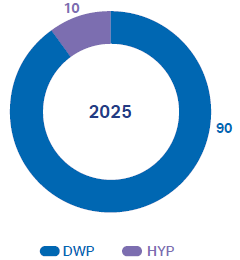
Pulp sales volumes by product category
Sales volumes (%)
| 2025 | |
| Sales volumes (metric tons) | 1,425 |
|---|---|
| Revenue (US$ million) | 1,162 |
| Adjusted EBITDA margin (%) | 19.6 |
“ We manufacture innovative packaging and speciality papers products and services with a commitment to sustainability and a circular bioeconomy. Working closely with brand owners, converters, printers, designers and communications agencies, we pride ourselves in being a reliable and global business partner.”
Our growth is driven by a compelling value proposition, continuous innovation, and an outstanding service record. We create solutions that address our customers’ most critical challenges, empowering them to grow sales, lower costs, enhance sustainability, and minimise risk.
We believe strong partnerships are built on trust and respect, which begins with reliability. Our customers’ success depends on our unwavering commitment to maintaining our assets, ensuring financial stability, providing global availability, and delivering consistent, premium-quality products.
A major market shift is underway as legislative changes and consumer demands drive brands toward sustainable packaging. Retailers, brand owners and consumers are actively seeking paper-based solutions that are biodegradable, recyclable, and functional. We see this as a significant opportunity and estimate it will drive 3% to 6% annual growth in global demand for our relevant products.
Sappi is strategically positioned to lead this paper-for-plastic movement. Our progress is supported by technically advanced and efficient paper machines, which are ideally suited for conversion to demanding packaging grades. We meticulously analyse market growth and technical requirements, ensuring we only invest in projects where our assets, production capabilities, and cost structures give us a significant competitive edge.
Our manufacturing presence across Europe, North America, and South Africa provides significant scale efficiencies and ensures a secure supply chain. With regional R&D centres and a collaborative approach to innovation, our customers gain a reliable partner with a truly global reach.
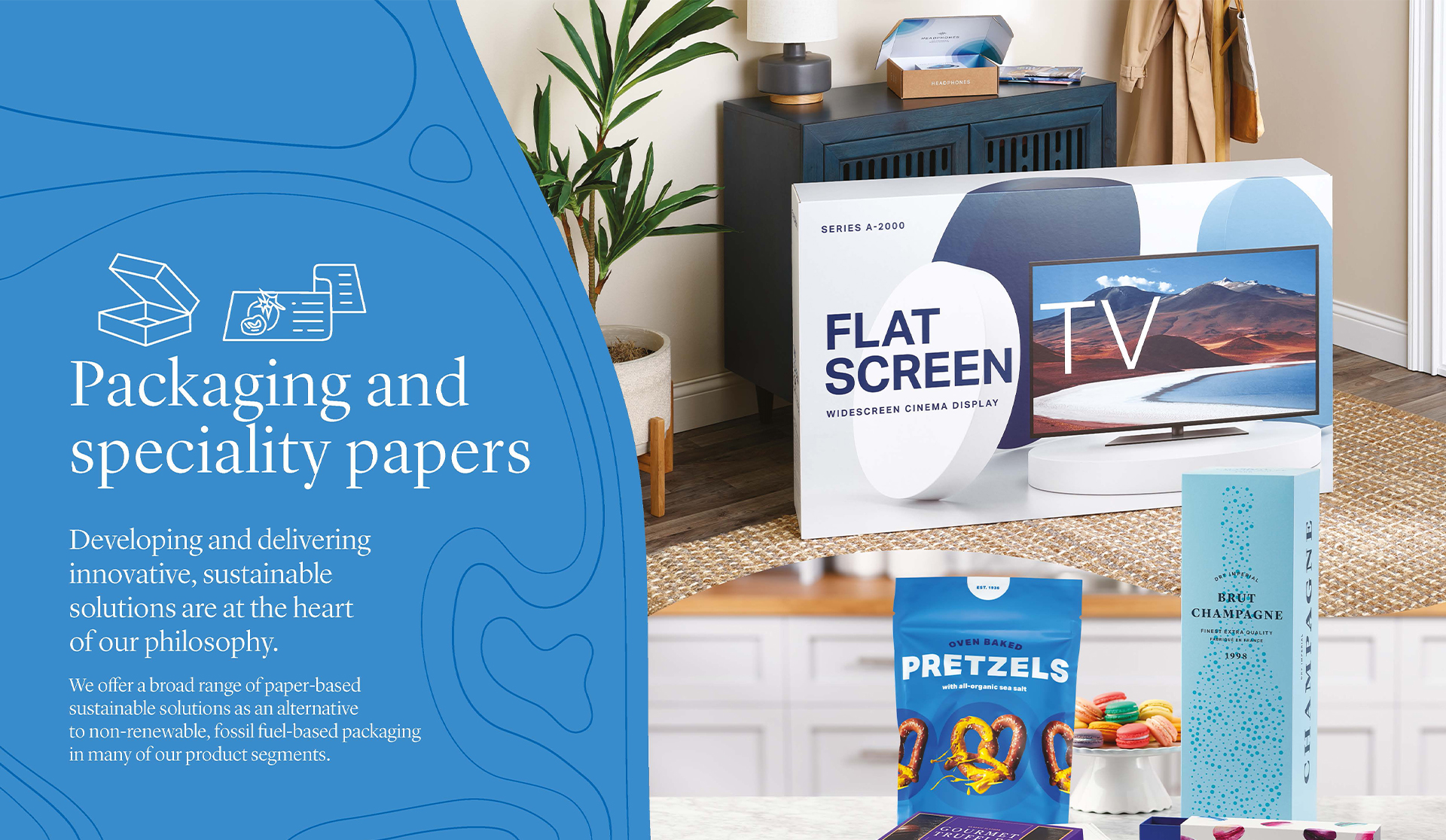
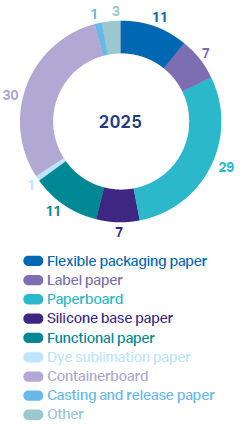
Innovative paper-based solutions with integrated functionalities such as barrier technology from water, oxygen and grease as well as sealing properties are suitable for various applications, notably in packaging for food as well as non-food markets. Flexible packaging is manufactured at our Alfeld Mill in Germany, at our Italian mills, Carmignano and Condino, Ngodwana Mill in South Africa, Somerset Mill in North America and Rockwell Solutions in Scotland.
High-quality coated boards for use in luxury packaging applications that require functionality and superior graphics across a range of market segments, including health and beauty, confectionery, premium beverages and food packaging. Paperboard is manufactured at our Somerset Mill in North America, and our Maastricht Mill in the Netherlands.
Includes liners and fluting, for corrugated boxes. Sappi’s products are found in applications like consumer packaging, shelf-ready packaging and transport packaging for agricultural and industrial uses. Containerboard is manufactured at our South African mills, Ngodwana and Tugela and Ehingen Mill in Germany.
Our label paper offering includes non-wet strength (cut and stack) and wet-strength label products, which are used in beverage, food and packaging applications. Our clay-coated kraft (CCK) and glassine release liners provide solutions not only for labels but applications such as self-adhesive tapes, medical and industrial applications. Label papers and self-adhesives are manufactured at our Gratkorn Mill in Austria, Somerset and Cloquet Mills in North America, Alfeld Mills in Germany, and our Carmignano and Condino Mills in Italy.
Used by suppliers in the fashion, textile, automobile and laminate industries. Our papers serve as moulds to impart textures on other surfaces, ranging from decorative laminates and synthetic leather to engineered films and rubber. Casting and release papers are manufactured at our Westbrook Mill in North America.
For digital transfer printing with water-based dye sublimation inks. Designed for the transfer of an image onto various materials, such as apparel, outdoor advertising and home textiles. Dye sublimation papers are manufactured at our Italian mills, Carmignano and Condino.
Used for bathroom tissue, kitchen towels, serviettes and medical and industrial wipes. Tissue paper is manufactured at our Stanger Mill in South Africa.
A prime example of our Thrive strategy is the recent investment at our Somerset Mill. The Somerset Mill PM2 conversion and expansion project was completed in May 2025. We converted a paper machine from graphic paper to solid bleached sulphate (SBS) board, more than doubling its capacity from 235,000 to 470,000 tons per year.
The technical ramp-up is exceeding expectations, with excellent market feedback on quality. This state-of-the-art machine positions our business competitively in the North American paperboard market, perfectly illustrating our commitment to reducing exposure to declining markets while decisively increasing our capacity in growing ones.
In September 2024, we completed an investment to expand label production at our Gratkorn Mill. This strategic move aims to establish Sappi as a leader in the label sector while reducing its reliance on the declining graphic papers market.

Packaging and speciality papers sales volumes by product category
Sales volumes (%)
| 2025 | |
| Sales volumes (metric tons) | 1,458 |
|---|---|
| Revenue (US$ million) | 1,814 |
| Adjusted EBITDA margin (%) | 3.6 |
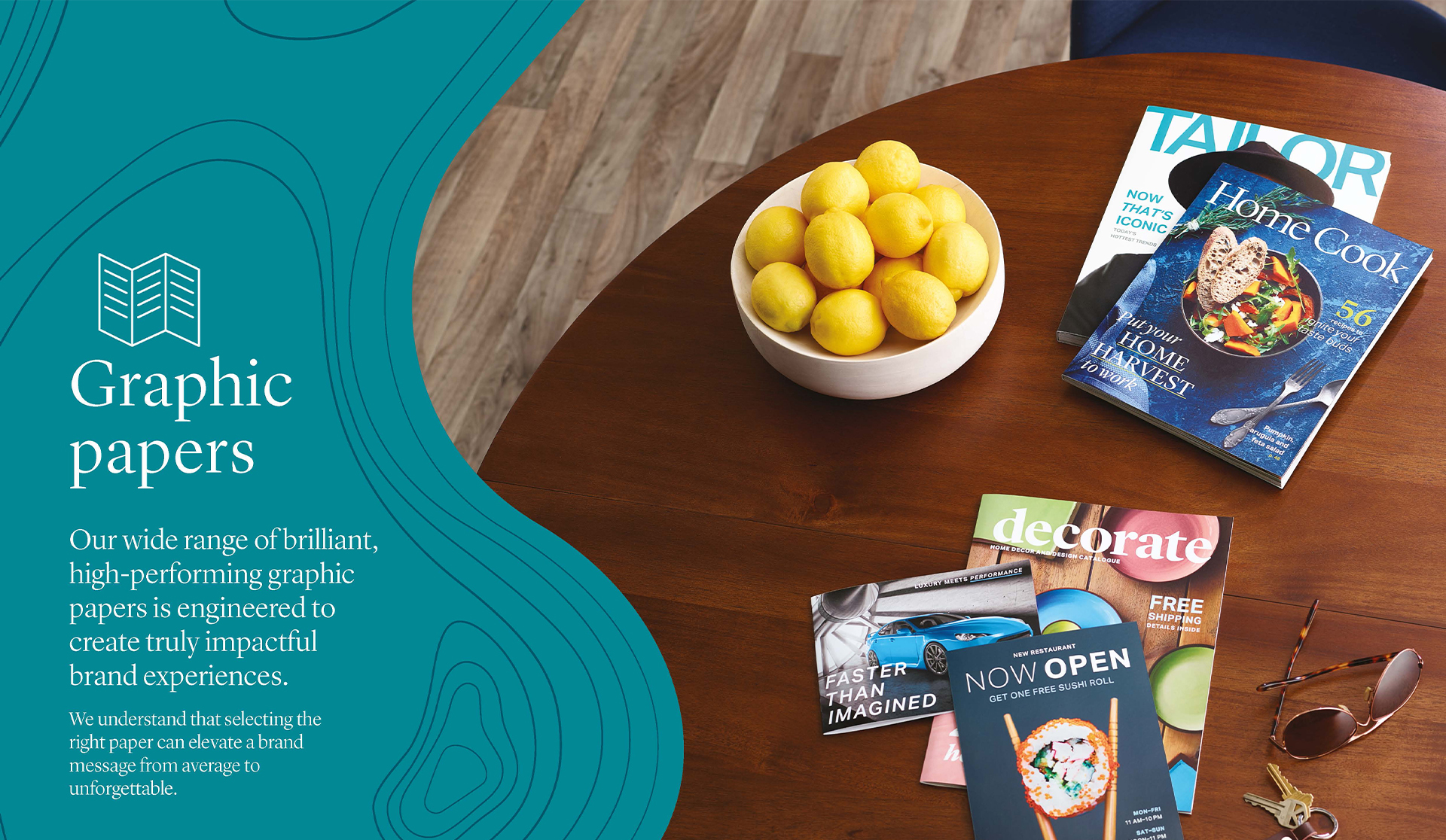
“At Sappi, we leverage our expertise to develop a diverse portfolio of graphic papers, meticulously designed to meet specific needs – whether it’s a premium product for an exclusive brand message, a versatile solution for broad requirements, or a more budget-friendly option. With Sappi, brands achieve a more memorable and lasting impression.”
This diverse portfolio is structured across the following four major grades of graphic paper, each engineered for distinct applications:
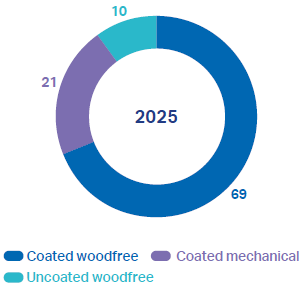
Printers and publishers use coated woodfree paper for a variety of marketing promotions, including brochures, catalogues, calendars, corporate reports, direct mail, books and magazines. Coated woodfree paper provides a smooth and uniform surface for optimal print fidelity. We manufacture coated woodfree paper in our North American and European businesses, but sell to customers all over the world. Coated woodfree paper products are sold through paper merchants, as well as directly to commercial printers.
Coated mechanical paper is primarily used in magazines, catalogues, newspaper inserts and other advertising materials. Sappi’s coated mechanical paper sales all come from our European business. Customers for this paper are typically web printers, publishers, retailers and cataloguers.
Uncoated woodfree paper is used for letterheads, business stationery, photocopy paper, books, brochures, envelopes, pamphlets and magazines. Sappi manufactures and sells uncoated woodfree paper in our European and South African businesses. Our main customers in this sector are paper merchants, commercial printers and retailers.
Newsprint is manufactured from mechanical and bleached chemical pulp, with uses including the printing of newspapers and advertising inserts. We manufacture and sell newsprint from our South African business.
We expect global graphic papers demand to continue declining by approximately 6% to 8% per annum. Our strategic focus in this segment remains to proactively manage capacity utilisation.
Graphic papers sales volumes by product category
Sales volumes (%)
| 2025 | |
| Sales volumes (metric tons) | 2,045 |
|---|---|
| Revenue (US$ million) | 2,372 |
| Adjusted EBITDA margin (%) | 8.1 |